

Visiting Makkah al-Mukarramah
The holiest city in Islam and the destination of every Umrah and Hajj. What to see, what each place means, and how to plan your days there.
Last updated: October 12, 2026
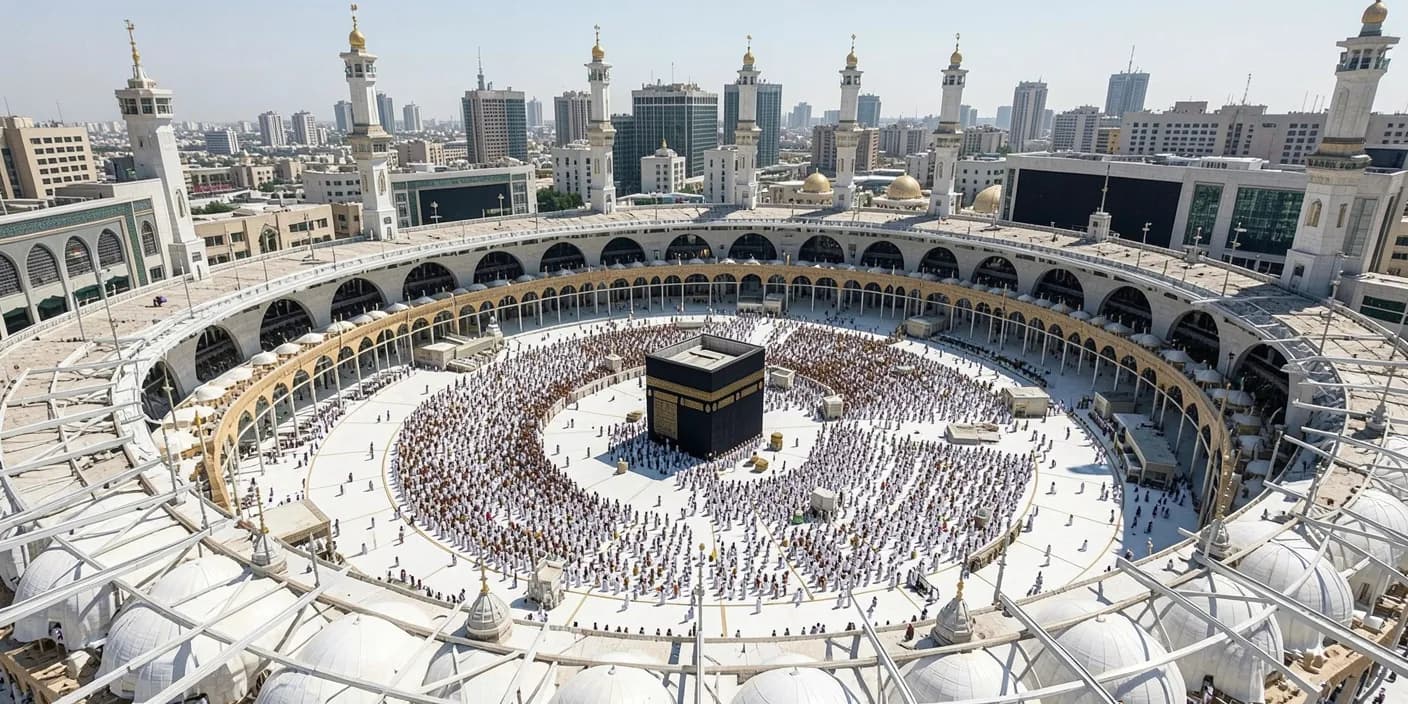
At a glance
- The Ka‘bah
- The qiblah of every Muslim, in the centre of al-Masjid al-Haram.
- Reward of prayer
- A prayer in al-Masjid al-Haram is better than a hundred thousand prayers elsewhere. (Ahmad and Ibn Majah)
- A sanctuary
- Makkah is a sacred precinct: hunting, cutting its trees and fighting are forbidden within it.
- Worship comes first
- Tawaf, prayer and remembrance in the Haram are worth more than any excursion.
A city of immense virtue and history
Makkah al-Mukarramah is the birthplace of the Prophet Muhammad ﷺ and the place where the Qur’an was first revealed. At its heart stands al-Masjid al-Haram and, within it, the Ka‘bah: the direction every Muslim faces in prayer.
A pilgrim comes to Makkah for worship first. The historical places around the city are visited to learn and to reflect, and none of them is part of Umrah or Hajj unless it is one of the Hajj sites on its day.
Important places in and around Makkah
What each place is, why it matters, and what a visitor does there. Distances are approximate, measured from al-Masjid al-Haram.
Al-Masjid al-Haram
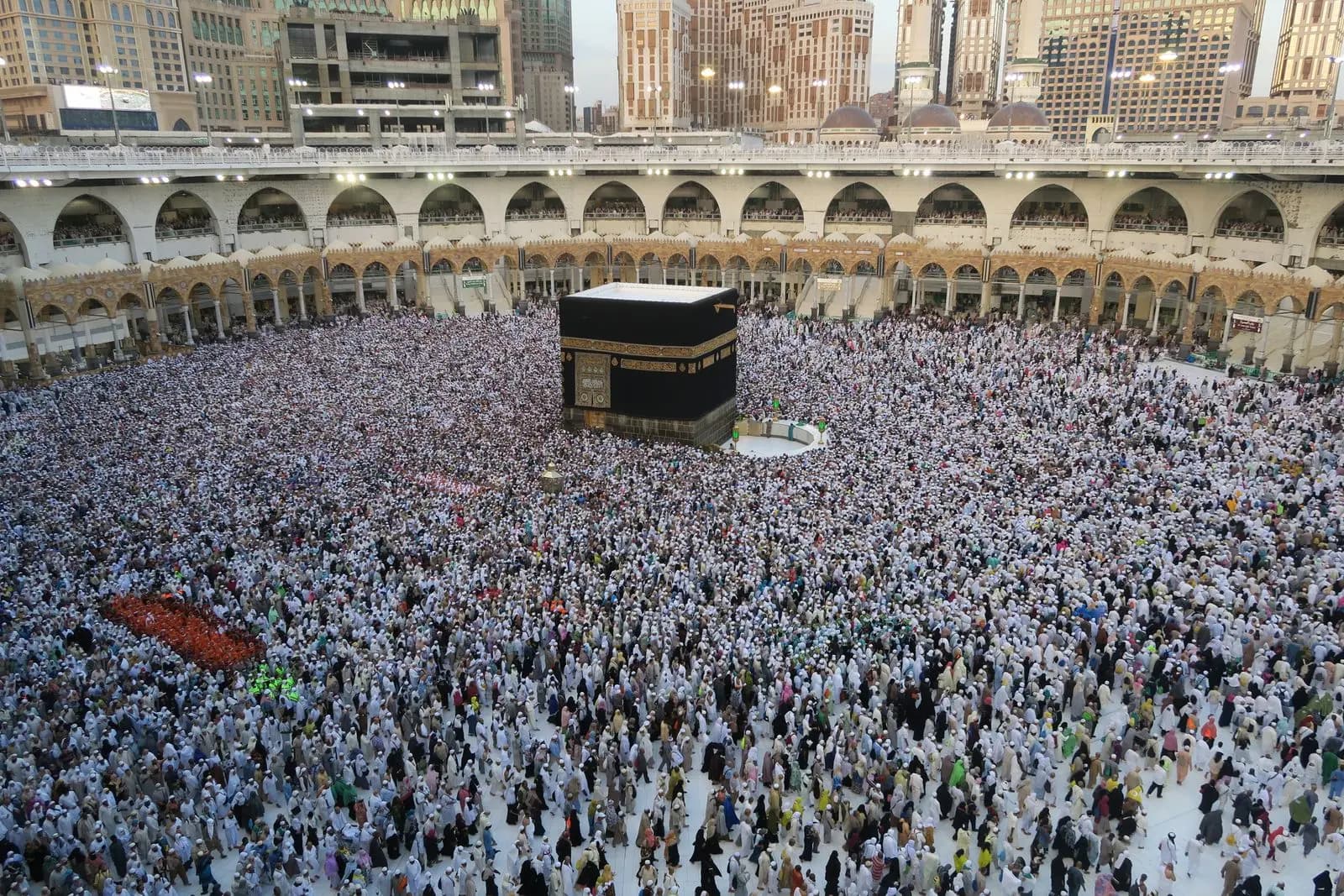
المسجد الحرامThe Sacred Mosque, built around the Ka‘bah. Inside it are the Black Stone, the Station of Ibrahim, the Hijr of Isma‘il, the well of Zamzam, and the hills of Safa and Marwah.
As a visitor
Pray as many of the five prayers here as you can, and perform tawaf whenever you are able. It is the only place on earth where tawaf is an act of worship.
Jabal al-Nour and the Cave of Hira
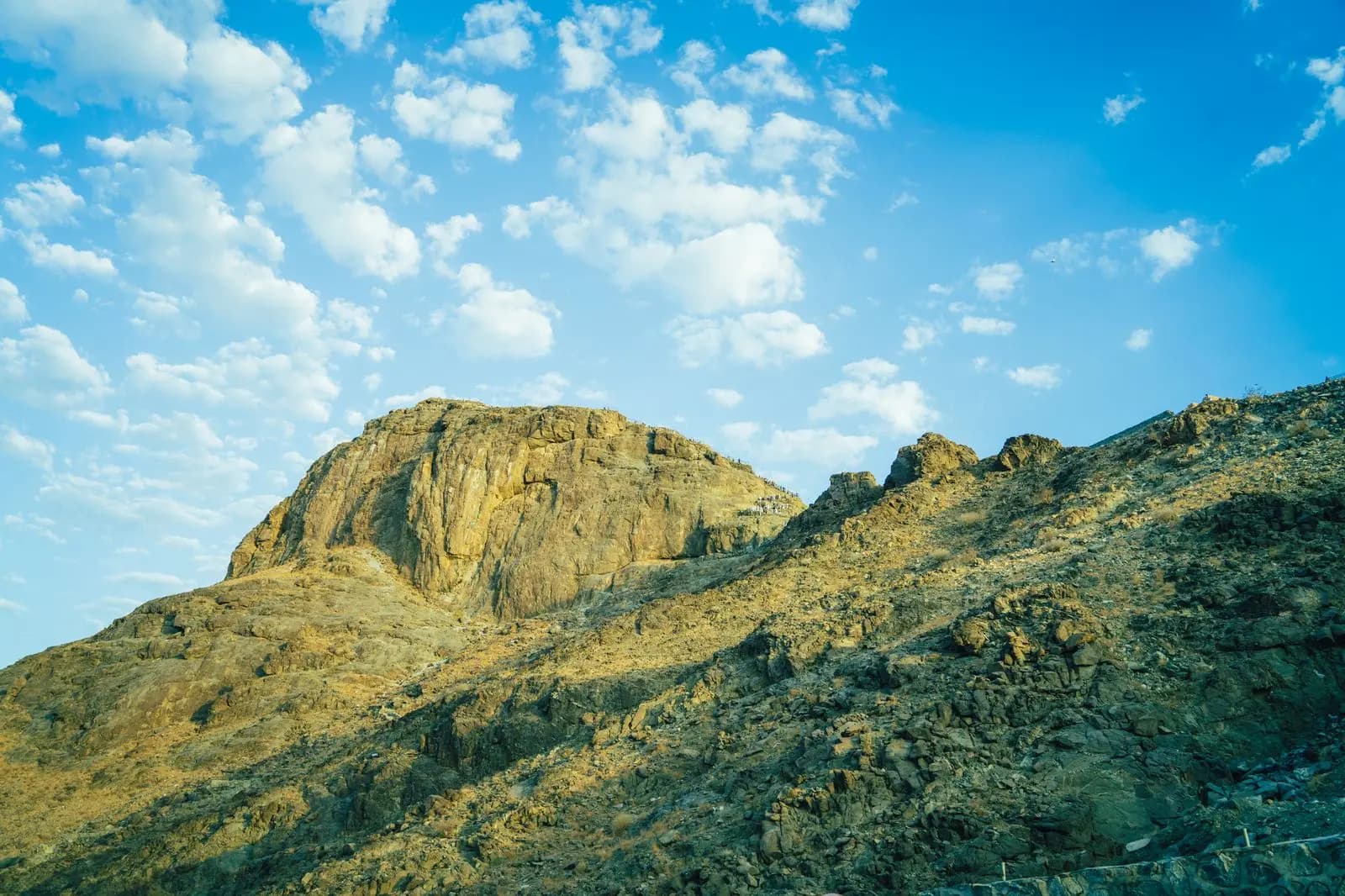
جبل النور · غار حراءThe mountain where the Prophet ﷺ used to withdraw in worship, and where the first verses of the Qur’an were revealed to him. (Qur’an 96:1-5)
As a visitor
The climb is steep and takes one to two hours. No prayer or dua is prescribed here, and you do not need to climb it. Do not attempt it in the midday heat or if your health is weak.
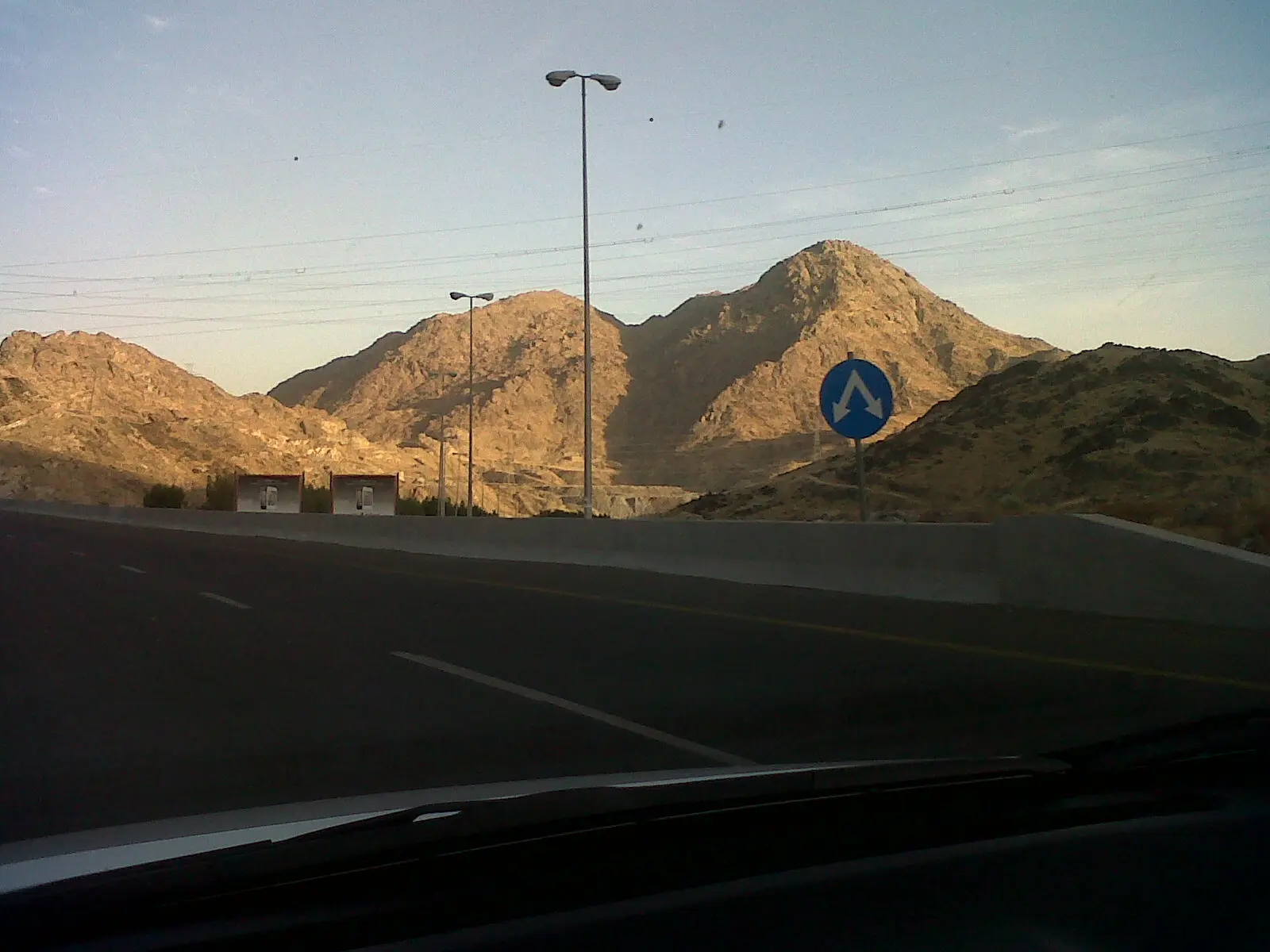
Photo: Abdul Razzaq Phulpot… (Panoramio), CC BY-SA 3.0, via Wikimedia Commons
Jabal Thawr
جبل ثورThe mountain whose cave sheltered the Prophet ﷺ and Abu Bakr, may Allah be pleased with him, for three nights at the start of the Hijrah to Madinah. (Qur’an 9:40)
As a visitor
A harder climb than Jabal al-Nour. Most groups view it from the road. There is no act of worship attached to it.
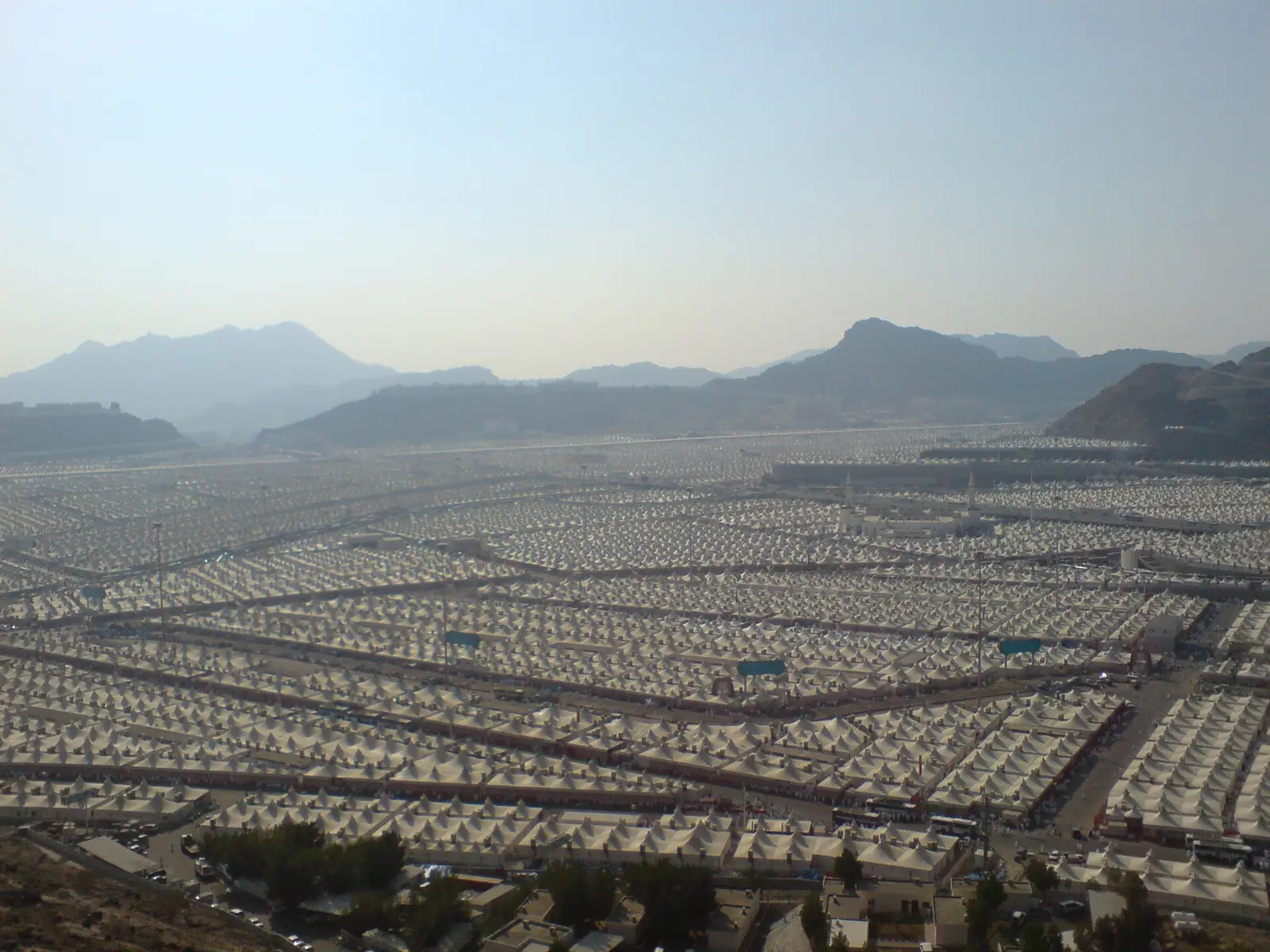
Photo: Mubeen Rahman, CC BY 3.0, via Wikimedia Commons
Mina
منىThe valley of tents where pilgrims stay during Hajj, on the 8th and again from the 10th to the 12th or 13th of Dhul Hijjah. The three Jamarat, where the pebbles are thrown, stand at its edge.
As a visitor
Outside the days of Hajj there is nothing to perform here. Groups pass through it to understand where the rites take place.
Arafat
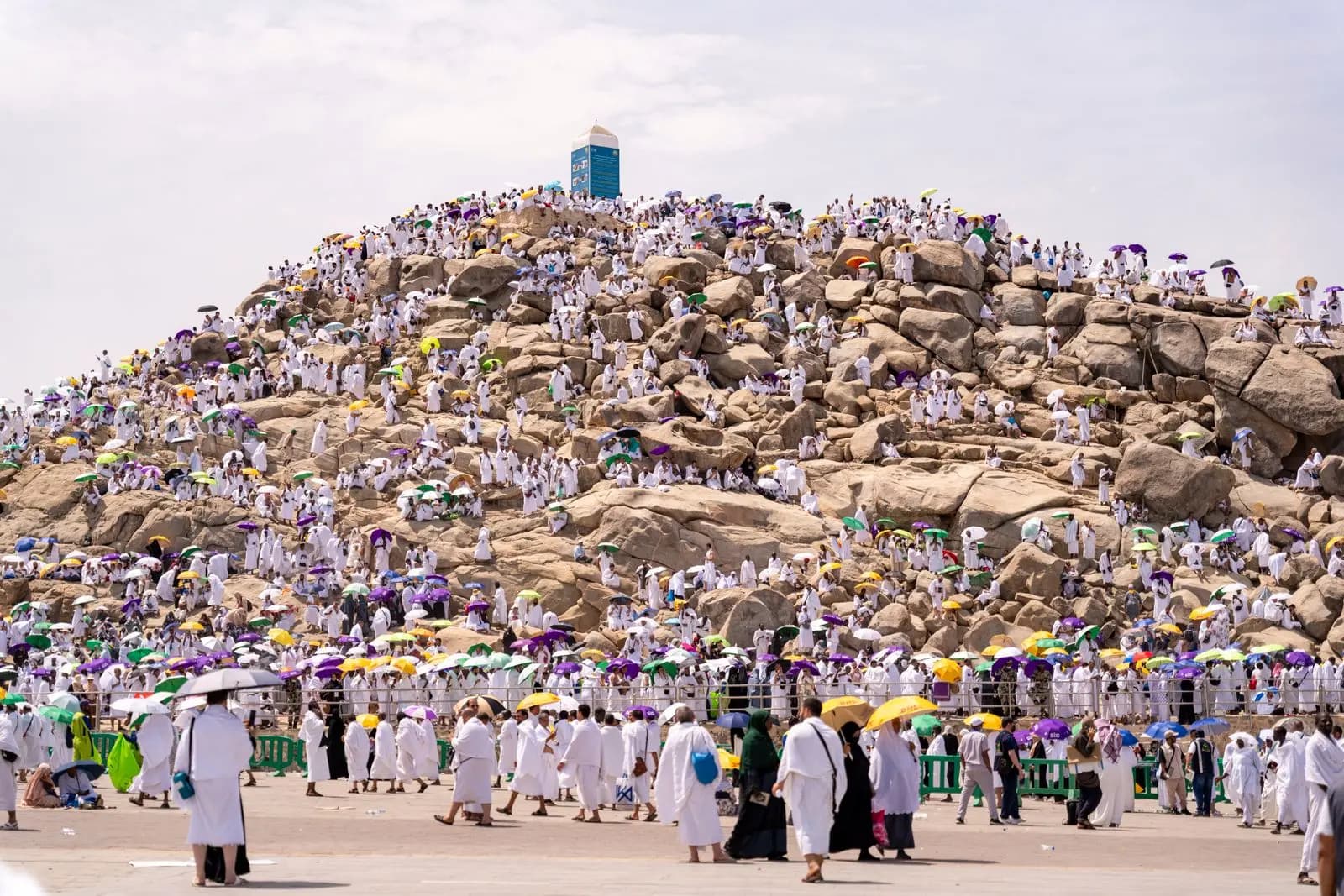
عرفاتThe plain where pilgrims stand on the 9th of Dhul Hijjah. The standing at Arafat is the heart of Hajj, and it was here that the Prophet ﷺ delivered his Farewell Sermon.
As a visitor
Outside Hajj it is visited to see the place. Climbing Jabal ar-Rahmah, the Mount of Mercy, is not prescribed, on the Day of Arafat or on any other day.
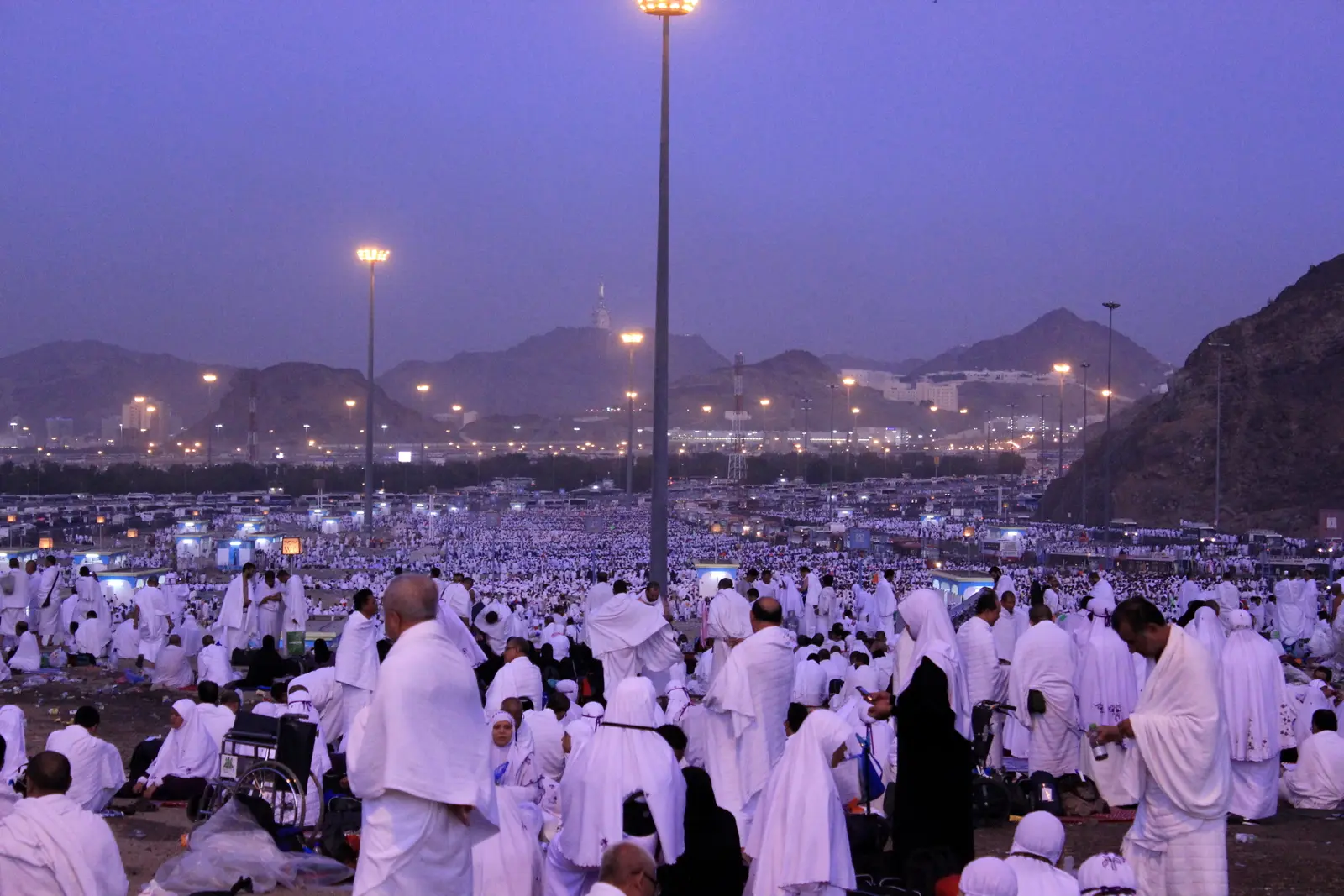
Photo: Arisdp, CC BY-SA 4.0, via Wikimedia Commons
Muzdalifah
مزدلفةThe open plain between Arafat and Mina where pilgrims spend the night after Arafat, pray Maghrib and ‘Isha together, and gather pebbles. The Qur’an calls it al-Mash‘ar al-Haram. (Qur’an 2:198)
As a visitor
Outside Hajj there is nothing to perform here. It is seen on the way between Arafat and Mina.
Plan your stay with confidence
- Getting there
- Most pilgrims land at Jeddah, about 90 km away, and continue to Makkah by bus or the Haramain train. If you are coming for Umrah, you must already be in ihram before you land: the miqat is crossed in the air.
- Getting around
- The Haram is reached on foot from nearby hotels, and by hotel shuttle or taxi from further away. The mosque is very large, so note the number of the gate you entered by, and agree a meeting point outside with your family.
- The best times
- The mosque is quietest in mid-morning and late at night, and busiest after each prayer, on Fridays, in Ramadan and in the Hajj season. Make tawaf at a quiet hour if you are elderly or with children.
- Good to know
- Carry your hotel card and your Hoggaan ID. Drink often; Zamzam is available throughout the mosque. Bring a small bag for your shoes, and keep your phone charged for your permits in the Nusuk app.
Common questions about visiting Makkah
Are the historical sites part of Umrah or Hajj?
No. Umrah is completed entirely inside al-Masjid al-Haram. Mina, Arafat and Muzdalifah are part of Hajj on their own days only. Jabal al-Nour and Jabal Thawr are not part of either.
Is there a special prayer or dua at these places?
Not at the historical sites. No particular prayer or dua is reported for the Cave of Hira or Jabal Thawr. What is prescribed is in the Haram, and at the Hajj sites on the days of Hajj.
Can women visit all of these places?
Yes. Women pray in al-Masjid al-Haram and perform tawaf and sa‘i there, and may visit the other sites with their group. The mountain climbs are demanding for anyone.
How many days should I spend in Makkah?
The Umrah itself takes a few hours. The remaining days are for prayer in the Haram, which is the reason to be there. Our groups divide their stay between Makkah and Madinah; ask us for your group's programme.
Plan your Umrah with Hoggaan
Visa, flights, hotels near the Haram and a guide who speaks your language, from your first call to your safe return.